Why Channel Change Speed Is the Canary in the Coal Mine for Hotel Tech
The Edison platform delivers sub-second channel changes through OnStream, a cloud-based platform from DISH Business. Edison deploys it across hotel properties through its cloud-managed platform. The result is a guest experience that responds at the pace people actually expect from a screen in 2026.
Jul 3, 2026
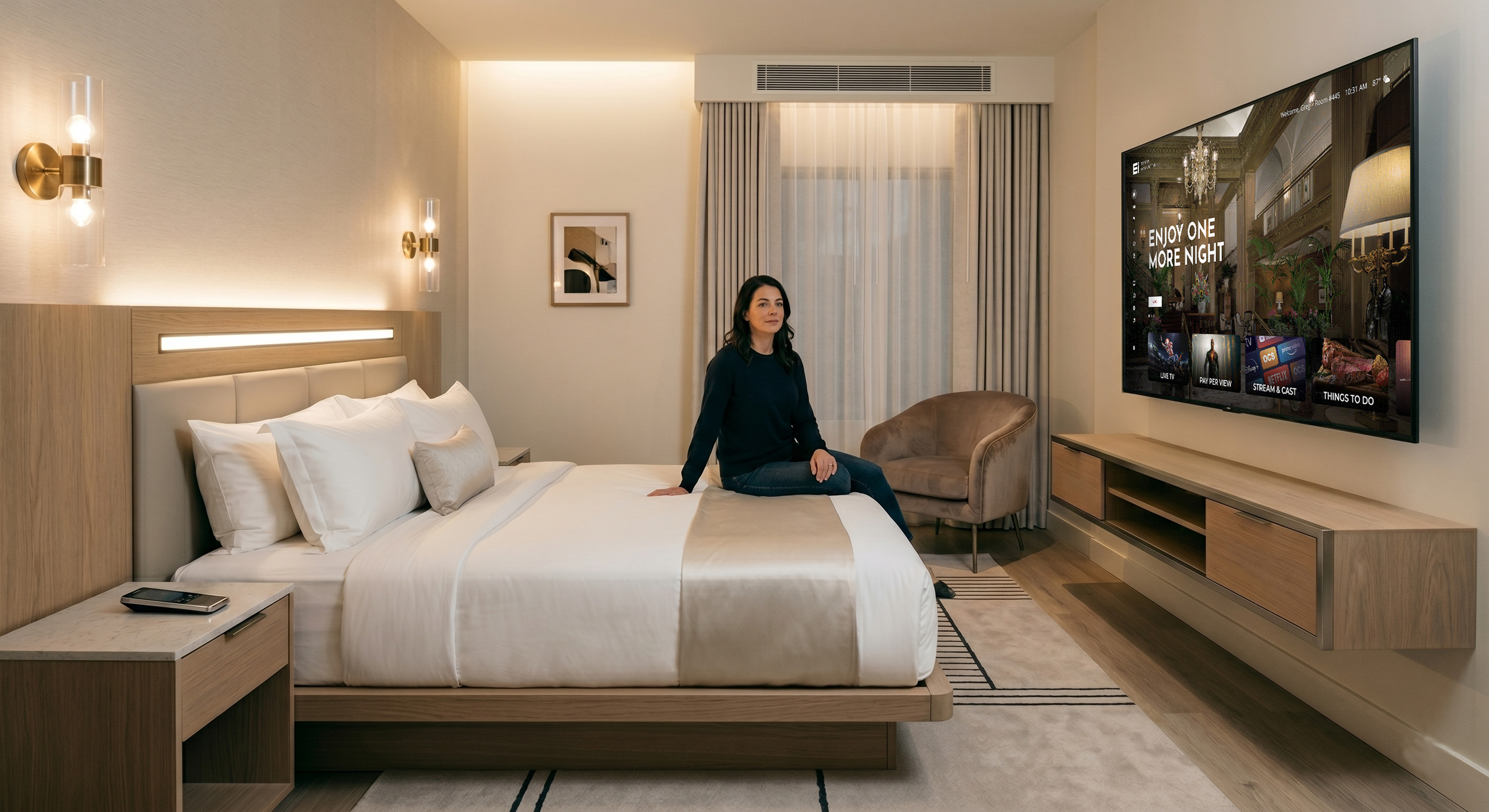
A guest checks into a hotel, drops their bag, sits on the edge of the bed, and picks up the remote. They press a button. They wait.
Four seconds is the standard for a channel change on most hotel television systems. Four seconds doesn't sound like much. It is the lag between pressing a button and seeing something happen on a screen in a room you paid a few hundred dollars to sleep in. If you have stayed in enough hotels, you have felt it: that small, slightly irritating confirmation that the technology in this room is not quite working at the pace everything else in your life works.
Most guests would not be able to tell you why the experience feels dated. They just know that it does.
What four seconds actually means
The Edison platform delivers sub-second channel changes through OnStream, a cloud-based platform from DISH Business. Edison deploys it across hotel properties through its cloud-managed platform. The result is a guest experience that responds at the pace people actually expect from a screen in 2026.
The difference between sub-second and four seconds is not just speed. It is architecture.
Legacy hotel TV systems run the channel change process locally, on hardware installed at the property, processing through firmware configured at installation and largely unchanged since. The guest experience is the output of a technology stack built for a different era of connectivity.
Four seconds is what it looks like when a hotel TV system is a hardware project rather than a software platform. Most of the market still operates at that standard. Which means that for the operators on those systems, four seconds is what guests feel every time they change a channel, every day of every stay.
That is not a neutral data point. It is a measurable gap in guest experience, repeated thousands of times per day across a property.
The canary is telling you something
Channel change speed is, in practice, a proxy for something larger. A system fast enough to change channels in under a second is also a system that can push content updates remotely, monitor device health continuously, and respond to issues before they become visible to a guest. Those capabilities require the same underlying infrastructure.
This is why we think of channel change speed as diagnostic. If your platform is slow to respond to a remote control, it is almost certainly also slow to respond to a content update request, an equipment fault, or an unusual pattern in device behavior at 2:47 in the morning.
ArgusX, the monitoring layer built into the Edison platform, operates on this same principle. When a device falls out of expected performance parameters, ArgusX identifies the issue and, in most cases, resolves it before anyone on the property staff knows it happened. Not because the system is watching a dashboard. Because the system is always watching. That is what continuous, cloud-based monitoring looks like in practice. It is not a feature you configure. It is how the platform runs.
The connection between channel change speed and ArgusX autonomous monitoring is not incidental. They are both expressions of the same architecture: software-first, cloud-managed, and built to operate at the pace of a modern technology platform rather than the pace of legacy hospitality hardware.
Why hotel operators should care about the demo
Technology pitches in the hospitality industry are not in short supply. Most of them are feature lists: here is what the system can do, here is what the screen can show, here is the dashboard you will have access to. Feature lists are easy to produce and hard to evaluate.
Sub-second channel change speed is different because it is demonstrable in a room, in thirty seconds, without a slide deck.
Press a button. Watch what happens. That is the entire demo. And what it communicates to any operator who has worked with legacy systems is immediate: this platform is not running on the same infrastructure as what you have now. The speed is the proof point. The product roadmap, the architecture documentation, the case study data; all of that follows naturally from a demo that the operator can feel.
When we talk to hotel groups about platform replacement, this is often the moment that changes the conversation. Not because sub-second is a feature that makes guests cheer. Because it is evidence that the underlying system is built differently, and once an operator understands that, they start asking different questions. What else is the platform doing that the old system could not? What is ArgusX catching that the old system was missing? What does remote content management across a portfolio actually look like in practice?
Those are the right questions. And channel change speed is what opens the door to them.
One question worth bringing to your next technology review
The next time you are evaluating your hotel TV platform, or your contract is coming up for renewal, ask the vendor to demo a channel change.
Not a content management capability. Not the programmatic advertising integration. Just: press a button, watch the screen. Time it.
If the answer is four seconds, you now know what the architecture beneath it looks like. And you know what the alternative feels like.
Edison Interactive builds cloud-managed hospitality technology for hotels, resorts, and golf properties. We would be glad to show you a live demo of sub-second channel performance and the ArgusX monitoring layer. Contact us at sales@edisoninteractive.com

recent Articles
Read more relevant posts that you might like
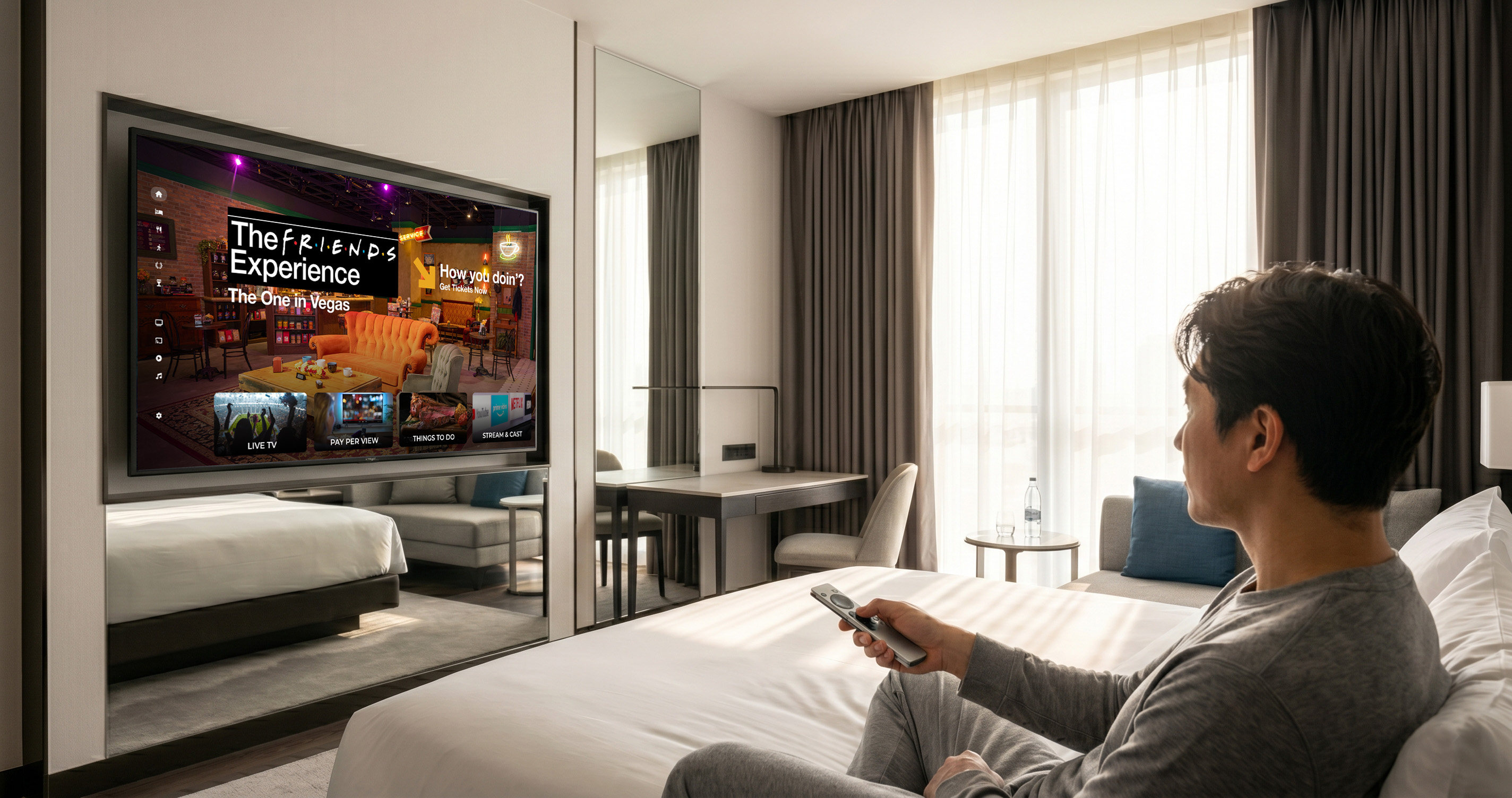


Turn hospitality and golf screens into profit centers
Edison Interactive powers the next generation of hotel TV systems and immersive golf cart GPS platforms
delivering premium guest experiences, operational intelligence, and scalable revenue.
.jpg)