
What Hotel TV Content Management Systems Don't Tell You And Why It Matters for Your Bottom Line
Most hotel TV CMS platforms focus on features and cost savings, but the real opportunity lies in transforming in-room entertainment into a revenue-generating asset through advertising, PPV, and autonomous performance management.
Apr 24, 2026
Search for "hotel TV content management system" and you will find a consistent set of talking points across every vendor in the category.
Enhanced guest experience. Centralized management. Branding and upselling opportunities. Energy efficiency. Long-term cost savings.
These are real benefits. None of them are wrong. And if your property is still running an old analog system with no centralized control, any modern CMS platform will deliver meaningful improvements on every one of those dimensions.
But there are things almost no hotel TV CMS vendor mentions: not in their marketing, not in their case studies, and not in contract negotiations. And those omissions are worth understanding before you sign anything.
What the Standard Hotel TV System Pitch Gets Right
Let's give the traditional hotel TV system the narrative it's due. The core promises are legitimate.
Centralized control is genuinely better than managing hundreds of televisions individually. Pushing a firmware update to every room simultaneously, changing the channel lineup without dispatching staff, updating the welcome screen. These are real operational improvements that a cloud-managed system delivers and a legacy system cannot. If your property is still on a non-cloud platform, centralized management alone is a meaningful upgrade.
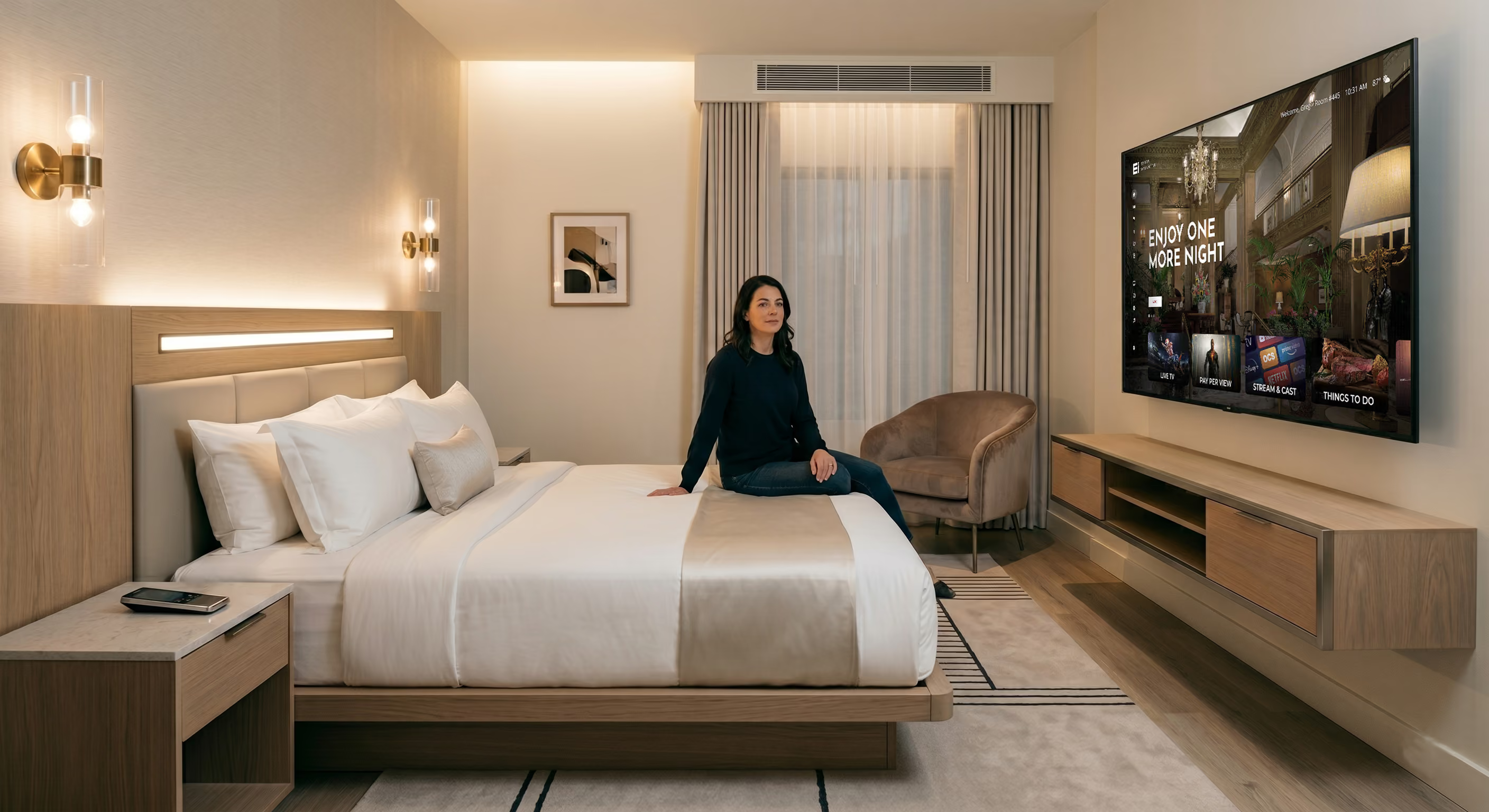
Modern guests also expect their hotel room to offer what their living room already has: seamless streaming, fast response, and familiar interfaces. The difference between a guest who says "the TV was outdated" and one who says nothing at all about the TV is almost entirely a platform question, not a hardware question.
And the in-room screen genuinely is one of the best upselling surfaces in the building. A guest who can browse and book spa availability directly from the TV is more likely to book than one who has to pick up the phone.
These features are real. Any modern hotel TV platform should offer them. The standard CMS pitch is not wrong. It is just incomplete in ways that matter operationally and economically.
The First Gap: Monitoring That Prevents Problems, Not Just Responds to Them
The standard CMS pitch does address monitoring. Remote troubleshooting, centralized visibility, and reduced downtime appear in almost every vendor's feature list.
But there is a meaningful difference between a system that enables remote troubleshooting and one that performs autonomous resolution before anyone has to troubleshoot.
In most hotel TV deployments, monitoring means this: when a guest calls the front desk to report a broken TV, a ticket is logged, and someone eventually addresses it. Some more advanced systems allow a technician to remotely access a screen, but that still requires a human to identify the problem, initiate the connection, and execute the fix. The guest has already had a bad experience. The front desk has already handled the escalation. The review has already been mentally drafted.
ArgusX, the monitoring layer embedded in the Edison platform, operates differently.
Every screen in every room continuously reports health data. When ArgusX detects an anomaly (a response latency issue, a firmware failure, or a streaming connection drop), it does not wait for a guest complaint or a technician login. It attempts to resolve the issue autonomously, immediately, logs the event, and flags the room for follow-up if the issue requires human intervention. In most cases, the problem is resolved before the guest is aware that anything has happened.
The operational implication of that distinction is significant. A property running ArgusX is not responding to broken TVs. It is preventing broken TV experiences. Those are not the same thing, and the difference shows up directly in guest satisfaction scores, front desk call volume, and the negative reviews that mention in-room technology.
The best hotel technology is invisible. ArgusX is built to keep it that way, monitoring every screen, every room, around the clock, so the guest experience is never interrupted by a problem the platform could have prevented.
This is also where the platform performance questions matter. A system that responds to channel changes in under a second sets a different operational baseline than one that takes three to five seconds. Guests notice the lag before they notice anything else about the interface. Sub-second channel speed is not a luxury specification. It is the difference between technology that disappears into the guest experience and technology that reminds the guest it exists.
The Second Gap: The Screen Already Generates Revenue. The Question Is for Whom.
Here is what almost no hotel TV CMS vendor mentions in their marketing: the platform you are running generates revenue. Not hypothetically. Right now.
In the traditional hotel TV legacy model, any revenue generated by the platform flows generally to the vendor. The property pays a monthly per-room fee. The screens deliver content. This arrangement is not buried in the fine print. It is simply not discussed. Most operators have never asked the question because the idea that in-room television could generate revenue for the property has not been part of the conversation.
The Edison platform is built around a different model.
A hotel that uses its in-room screens to promote its restaurant, spa, pool hours, and late checkout offers is not running an ad campaign. It is running its own media, targeted at the highest-intent audience it will ever reach, at the moment that audience is making decisions about how to spend the rest of their stay. This is internal video marketing, and it drives ancillary revenue that requires no external partner, no revenue share, and no ad impression sold to a third party.
Above that layer, the Edison platform operates as a hospitality media network. Brands (financial services, automotive, travel, luxury consumer goods) run campaigns on in-room screens across the Edison network, and hotels in the network share in that advertising revenue on a property split basis. The guests being reached are the premium, high-value audiences those brands are already spending significant budgets to find elsewhere. The inventory is verified by a check-in record, not a cookie.
Neither stream requires additional headcount, new operational workflows, or capital investment. The screens are already installed. The guests are already watching.
The Right Questions to Ask Before Your Next Hotel TV Contract
The standard hotel TV CMS evaluation focuses on features: streaming capability, casting options, interface quality, brand customization, and support contracts. These are legitimate evaluation criteria.
But before you evaluate any of those features, the foundational questions are operational and economic:
What happens when a screen fails at 2 AM? The answer reveals the monitoring model. If the answer is "a guest calls the front desk, and we log a ticket," that is a reactive system. If the answer is "ArgusX detects and attempts resolution automatically before the guest is aware," that is an autonomous one. The guest experience difference is significant. The review score difference is measurable.
What does this platform generate for my property? Not "what does it cost?" Every platform costs money. The more important question is what it produces. A platform that costs $X per room per month but enables on-property media and advertising network revenue can net out significantly differently than one that costs the same and produces nothing.
What does our current contract say about revenue participation? Read it. If there is no revenue section, that tells you everything. The platform generates revenue. The absence of a revenue section means the property is not a participant in it.
How does centralized management actually work at scale? Not just "can you update all rooms simultaneously," but what is the latency between a configuration change and room-level delivery? For a convention property managing welcome screens for groups, event signage, and in-stay promotions simultaneously, speed and reliability at scale are operational requirements, not differentiators.
What is the monitoring model, and can you show it in action? Ask to see the monitoring dashboard. Ask how many issues were autonomously resolved last month. A vendor who has autonomous monitoring can demonstrate it. One who only has reactive troubleshooting will redirect the conversation.
What a Modern Hotel TV Platform Should Deliver
The features the standard CMS pitch describes (centralized management, guest streaming, branded interfaces, and upselling tools) are the table stakes. Any platform worth considering in 2026 should deliver all of them.
The differentiators that determine whether a platform is operational infrastructure or an afterthought are the ones the standard pitch tends to skip:
Autonomous monitoring that resolves issues before guests experience them, not a ticketing system that waits for a complaint. Proactive is categorically different from reactive, and the gap shows up in reviews, comped nights, and front desk load.
Sub-second channel response. A platform that takes three seconds to change a channel is a platform that reminds every guest it exists. That is not what good hospitality technology does.
On-property media capability that lets the hotel use its own screens to drive ancillary revenue without an external partner, a third-party rev share, or a campaign management workflow.
Connection to an advertising network that generates revenue for the property from brands who are already paying to reach hotel guests, not just for the vendor.
Cloud-managed architecture that pushes updates, monitors performance, and resolves issues remotely, not a hardware-first system maintained by whoever is onsite.
The Edison Interactive platform was built around all of these. The screens are already in your rooms. The guests are already watching. The only variable is whether the platform above the hardware is working for you.
Edison Interactive builds cloud-managed hospitality technology for hotels and golf properties. To see the platform in practice, including a live demonstration of ArgusX autonomous monitoring: Schedule a Demo or Explore the Platform.

recent Articles
Read more relevant posts that you might like



Turn hospitality and golf screens into profit centers
Edison Interactive powers the next generation of hotel TV systems and immersive golf cart GPS platforms
delivering premium guest experiences, operational intelligence, and scalable revenue.
.avif)